
Family and Legacy
A note on names. In the Lakshman family, "Prince" and "Princess" are given names. Family history says this naming tradition began with Brahma Dass Lakshman, as a mark of the worth and dignity of each child, not as a claim to royalty. It is part of the names of two of his sons, among them Prince Gopal Lakshman, and of later generations. It is not a title, and the family makes no claim to royalty.
Behind Pandit B.D. Lakshman's public life was a large family. This page gives a short family tree, limited to what the family and the sources confirm, and then a longer article that follows his story into the next generation, through his youngest son, Prince Gopal Lakshman.
The family tree
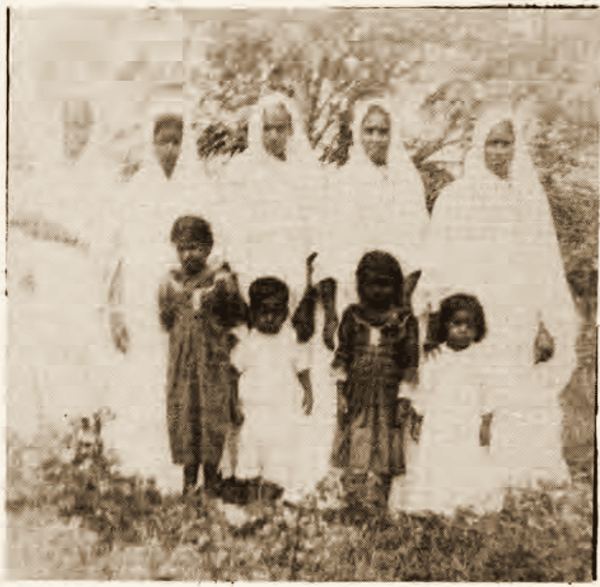
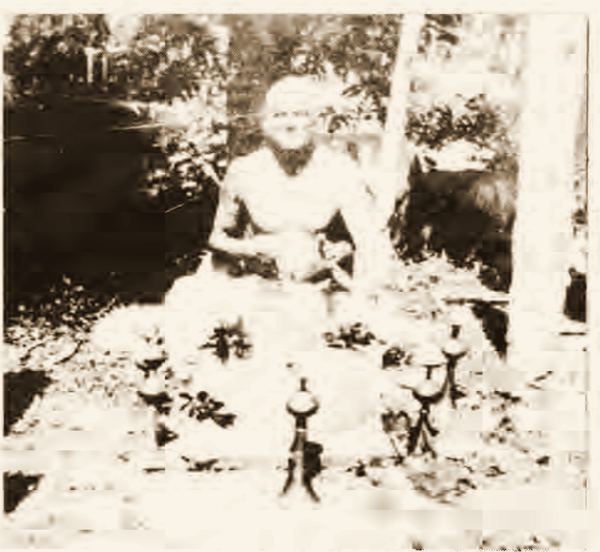
Cheta (also remembered as Bahu Chet Singh, and as Bahu Cheta Singh) and Sampat, both born in India. They came to Fiji under indenture in 1888. His birth certificate records these names and that both parents were born in India. The fuller name Bahu Chet Singh, a Bareilly origin, and the 1857 family account are family tradition, as told in the 1981 first edition and in a family history statement of 2026. Family research linking the line to the Hereford voyage of 1888 has not yet been independently confirmed. More on this is on the Early Life page.
Pandit Brahma Dass Lakshman (B.D. Lakshman), their son. Born at Waila, near Nausori, on 17 September 1900. Died in Brisbane on 5 October 1981, aged 81.
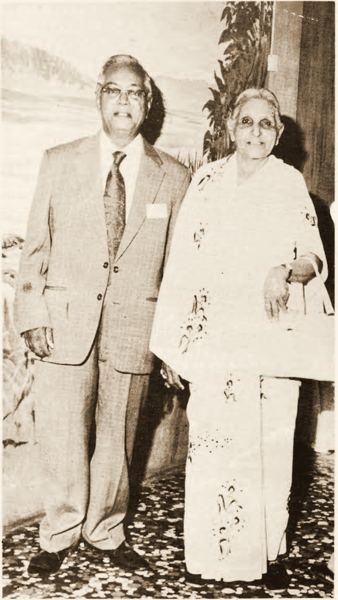
Mrs Rampiari Lakshman, his wife. She was the daughter of Gopal Sadhu of Nine Miles, Nasinu, who led the strikers' march to the Samabula bridge in 1920. The 1981 first edition, written when she was seventy-one, says that, coming from a family of warriors, she had "fully grasped the ideals of Pandit Lakshman" and had "lent her support and contribution" to him during his colourful life. She travelled with him: to Delhi in 1961, to a convention in Suva in 1974, and around the world in 1975. (Her name is spelled "Rampiary" in the text of the first edition; the family uses Rampiari.)
Their children. They had eleven children: seven sons and four daughters. In 1981, the first edition says, all of them were married and doing well, and the family was looking forward to a grand get-together in 1982, for Pandit and Mrs Lakshman's Diamond Wedding Jubilee.
Prince Gopal Lakshman (1949–2016), their youngest son. Born in Lautoka on 26 February 1949; died at Navua Hospital on 15 August 2016. Fiji Labour Party member of the House of Representatives, 1999–2006.
Later generations. Their descendants live in Fiji, Australia and beyond.
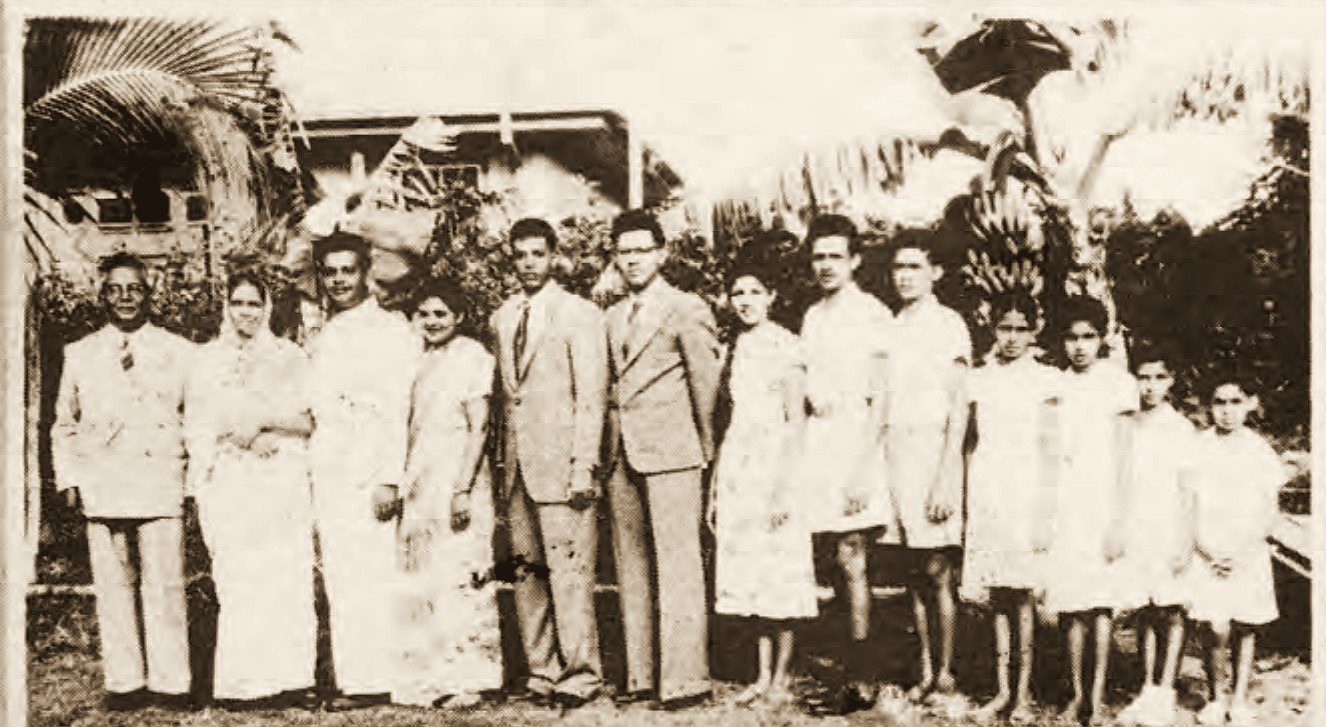
The 1956 family portrait
The 1981 first edition includes a family portrait taken on 24 June 1956. It shows Pandit and Mrs Lakshman with their children. To protect the privacy of living family members, the names in the original caption are not reproduced on the public site.
Standing on What Our Elders Built: Pandit B.D. Lakshman and Prince Gopal Lakshman
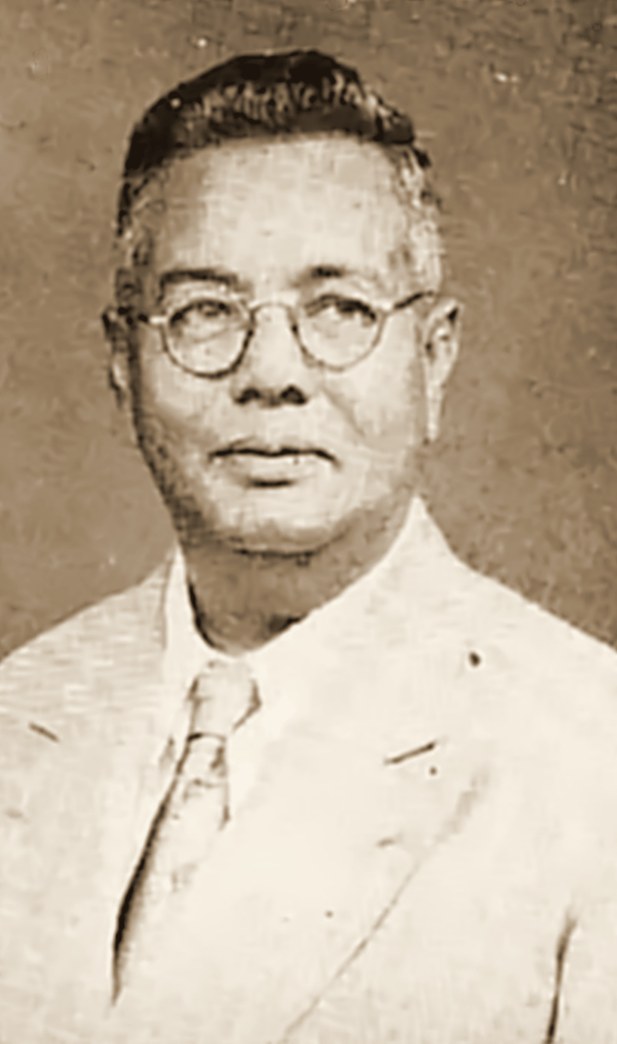
In the Lakshman family, Prince is a given name, not a title. It belongs to a father, a son and an uncle. The family makes no claim to royalty. The public record shows a long habit of service in Fiji.
Pandit Brahma Dass Lakshman, known in public life as B.D. Lakshman, was a teacher, a student in India during the independence movement, a member of Fiji's Legislative Council, a trade union leader, a school founder and a businessman. His youngest son, Prince Gopal Lakshman, served as a Fiji Labour Party member of the House of Representatives from 1999 to 2006. He was held hostage in the coup of 2000, and went back to the people who had elected him.
A teacher who went to India
Brahma Dass Lakshman was born at Waila, near Nausori, on 17 September 1900, the son of indentured labourers who had come to Fiji in 1888. He trained as a teacher and, in February 1927, sailed for India. He stayed about seven years, completed a B.A. and a B.T. at Benares Hindu University in 1933, came to know Mahatma Gandhi and Jawaharlal Nehru, and took part in the independence struggle.
The 1981 family account of his life, supported in outline by his obituary in Pacific Islands Monthly, records that during Gandhi's salt satyagraha of 1930 he was arrested and held for four months, first at Yerwada Central Prison, where Gandhi was also held, and later at Benares Central Jail. When he tried to come home in 1933, the colonial authorities sought to prevent his return. After protests from Fiji, and with a bond arranged, he came home in 1934.
Back in Fiji he started a model high school at the Gurukul, Saweni, near Lautoka, and later established Mahatma Gandhi Memorial College there. Accounts differ on his exact part in founding the Kisan Sangh, the cane farmers' union, in 1937. He was close to the farmers and mill workers, represented the union in negotiations, and was elected to the Legislative Council with its support.
Council, unions and a life of work
In 1940 he won the North-Western Indian seat in the Legislative Council, with 1,010 votes to 447. He served until 1944, when he lost the seat to A.D. Patel. He later served as president of the Kisan Sangh, in 1949, and of the Fiji Industrial Workers' Congress.
There were setbacks. He was not elected when he stood again in 1956. In August 1957, after an unofficial strike at the sugar mills, the Industrial Workers' Congress replaced him as its president. In 1959 he led a wage campaign for mill workers, won his Council seat back with 2,637 votes, and became president of the Fiji Trades Union Congress, serving in the Council into the early 1960s.
He was a businessman as well. In June 1954 the Governor opened his pearl-button factory on the outskirts of Lautoka, which made buttons from mother-of-pearl shells. In 1962 he bought a large tract of freehold land at Deuba, and in 1970 he turned the first sod of the Deuba Development; Pacific Harbour stands on that site today. His obituary records that he later acquired land at Navua and was planning to grow cane for ethanol and rum.
He and his wife, Mrs Rampiari Lakshman, had eleven children: seven sons and four daughters. The youngest son, Prince Gopal Lakshman, was born in Lautoka on 26 February 1949.
A copper plate, and a farewell
On 26 September 1981, at the Pacific Harbour Resort at Deuba, India's Prime Minister, Indira Gandhi, presented the Government of India's copper plate, an honour for those who had played a notable part in India's independence movement. B.D. Lakshman, then 81, was in Brisbane for medical treatment. The plate was received by two of his sons, among them Prince Gopal Lakshman, and their wives. One of the sons said the plates had been made in 1972, for the twenty-fifth anniversary of India's independence, and had not been presented earlier because India was not sure his father was still living.
Nine days later, on 5 October 1981, Pandit B.D. Lakshman died in Brisbane, aged 81. Pacific Islands Monthly remembered him as "a pioneer in the fields of industry, education, and the trade union movement in Fiji". Earlier that year, the India Fiji Girmit Council had chosen to honour him with a gold medal titled Fiji Ratana.
Into Parliament at fifty
His family has written that he always said that once he turned fifty he would enter Parliament, and that he kept his word. In May 1999 he stood as the Fiji Labour Party candidate for the Viti Levu South Kadavu Indian Communal Constituency. He won with 3,992 votes, or 63.8 per cent, against Maan Singh of the National Federation Party. He took his place on the government backbench when Mahendra Chaudhry was sworn in as Fiji's first Prime Minister of Indo-Fijian descent.
Fifty-four days
On 19 May 2000, George Speight and a band of armed men stormed Parliament in Suva and took the Prime Minister and members of the People's Coalition Government hostage. Prince Gopal Lakshman was among them. He was held for 54 days, and was among nine hostages released just after midnight on 12 July 2000.
In July 2001 the journalist Philip Cass interviewed him in Suva. Cass recorded that, on a number of occasions, the parliamentarians were gathered together and made to lie on the floor as if they were about to be shot. He told Cass: "If they'd let us run the country for five years, Fiji would have been 20 years ahead." And then: "Instead, this coup has set us back 20 years."
He stood again in 2001 and was returned with 4,113 votes, or 73.5 per cent. He served until 2006. In early March that year he announced that he would not stand again. His nephew won the seat for the Fiji Labour Party in May 2006. Three generations of the family thus served in Fiji's legislature: B.D. Lakshman in the colonial Legislative Council, his son in the House of Representatives, and then a grandson in the same seat.
Away from Parliament he was managing director of B.D. Lakshman & Sons Properties Limited, based at Deuba. His family lives on in Fiji, Australia and beyond. Prince Gopal Lakshman died at Navua Hospital on 15 August 2016.
Carrying the baton
The public record of these two lives is not a story of unbroken success. Elections were lost as well as won, and a coup cut short a government in which a son had only just begun to serve. What remains is a teacher who went to India and came home to organise and to teach; a son who entered Parliament at fifty, endured captivity, and chose to stand again; and a family that still holds their names with care.
As the family puts it: "History always wins. We stand on what our elders built, and we carry the baton for those to come."
Sources for this page: Family facts confirmed by the family; the family birth certificate of B.D. Lakshman (family records), for his parents Cheta and Sampat, both recorded as born in India; a family history statement (2026), for the ancestry and for the Prince and Princess naming tradition; D. Sharma, A Brief Life History (Suva, 1981), including the 24 June 1956 caption; the Second Edition (2026), chapter “Family” and the note on names; his grandson, Prince Gopal Lakshman: A Political Journey & Legacy in Fiji, Version 1 (2026); Philip Cass, “Baptism of Fire”, The Round Table (2002), 366, pp. 559–574; Ana Madigibuli, The Fiji Times, 27 September 2020; “Seven Indo-Fijian MPs to skip polls”, Hindustan Times, 29 March 2006; Adam Carr, Psephos election archive (1999 and 2001 results); BBC News, 12 July 2000, as cited in the 2026 book; Pacific Islands Monthly, 1 December 1981, p. 74. Full details are on the Sources page.