
India: Student and Satyagrahi
1927–1934
No detailed record of Pandit B.D. Lakshman's seven years in India has yet been found outside D. Sharma's 1981 first edition and its photographs. This page therefore tells the story as the first edition told it, and uses words such as "the first edition says" to make that clear.
Two later records support the story in outline. His obituary in Pacific Islands Monthly (December 1981) says that during his seven years in India he became deeply involved in the freedom struggle led by Mahatma Gandhi, and was once gaoled for four months for his activities. And in September 1981 the Government of India honoured him with the copper plate it gave to those who had played notable roles in its independence movement, an honour told on the Copper Plate page.
"In the garb of an indentured labourer"
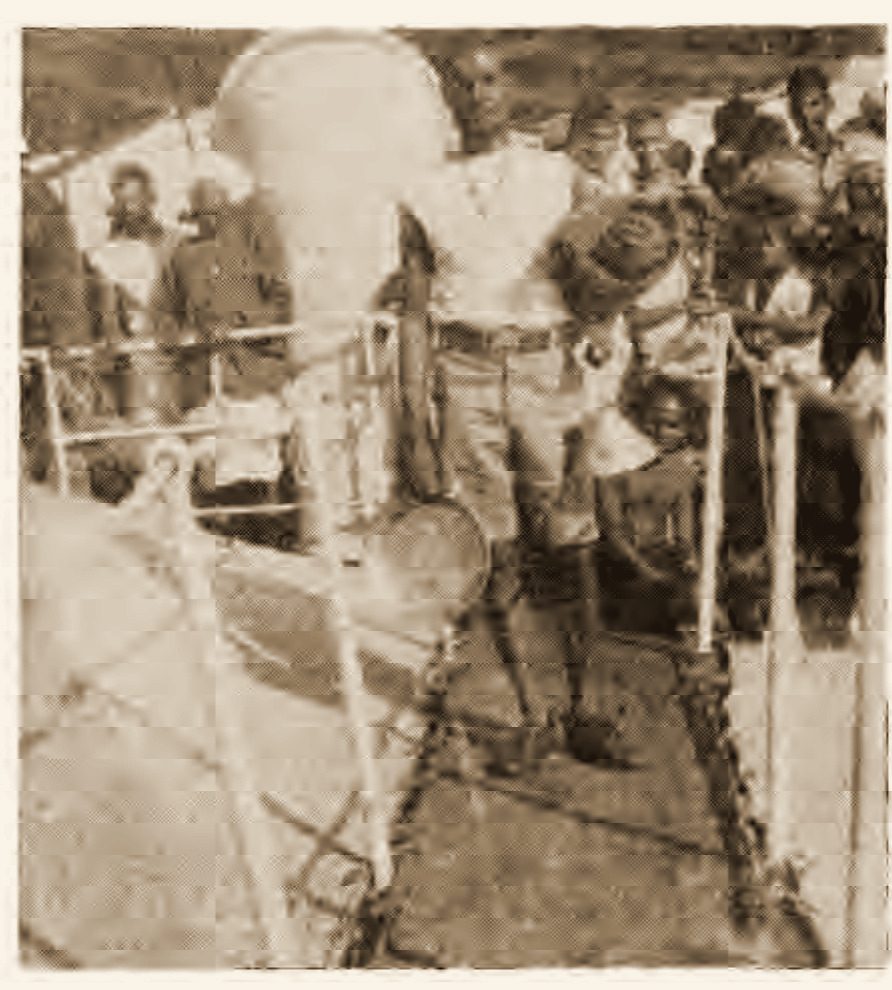
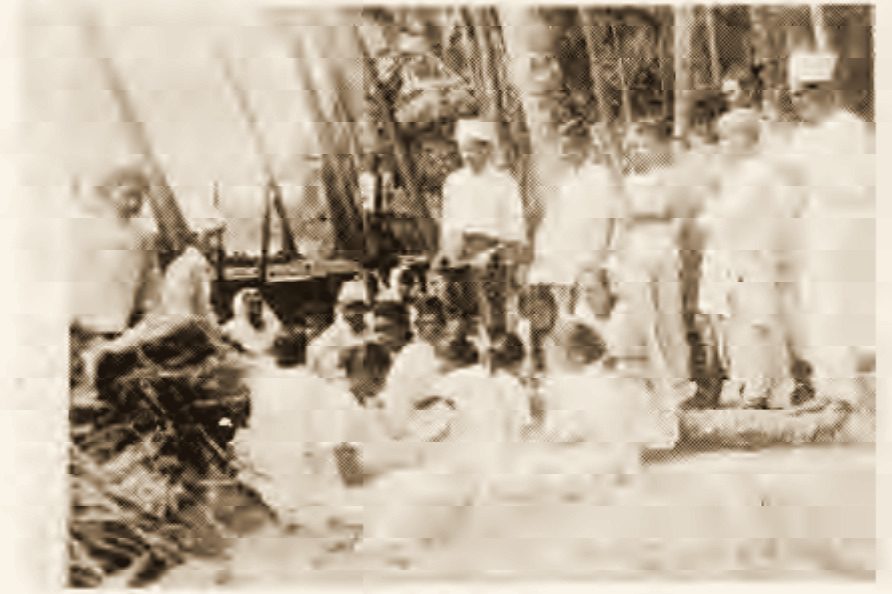
He sailed from Fiji on the SS Ganges in February 1927. The first edition says that, as the son of an indentured labourer, he left Fiji "in the garb of an indentured labourer". A photograph shows him on board with a ticket round his neck, a black blanket, a tin tasla and a tin lota.
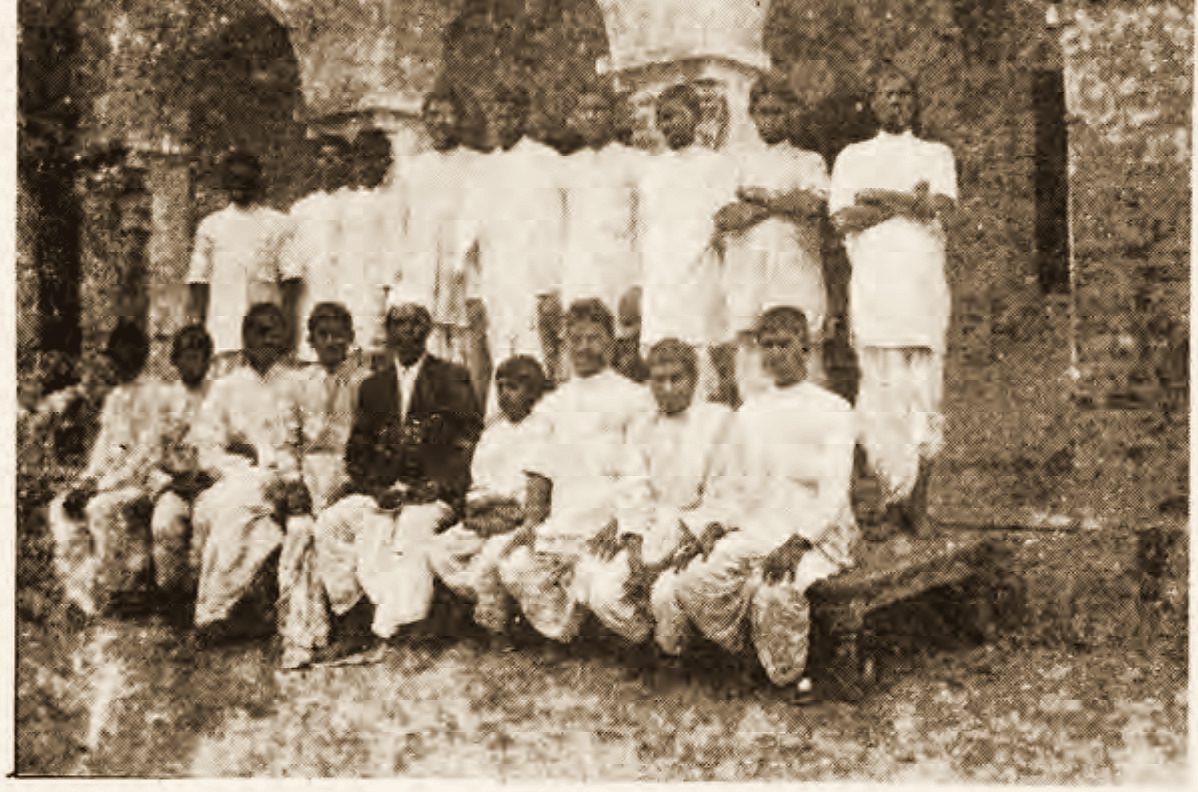
Arriving in India in the summer of 1927, he met Pandit Benarsi Das Chaturvedi, Shri Ram of the Gurukul at Brindaban, Master Vishnu Swarup and Ganesh Shankar Vidyarthi. He told them he had come for higher education. They told him that he was a grown man and should see India outside the university before going home, or he would carry nothing of India back to Fiji. He took the advice to heart.
A student in India
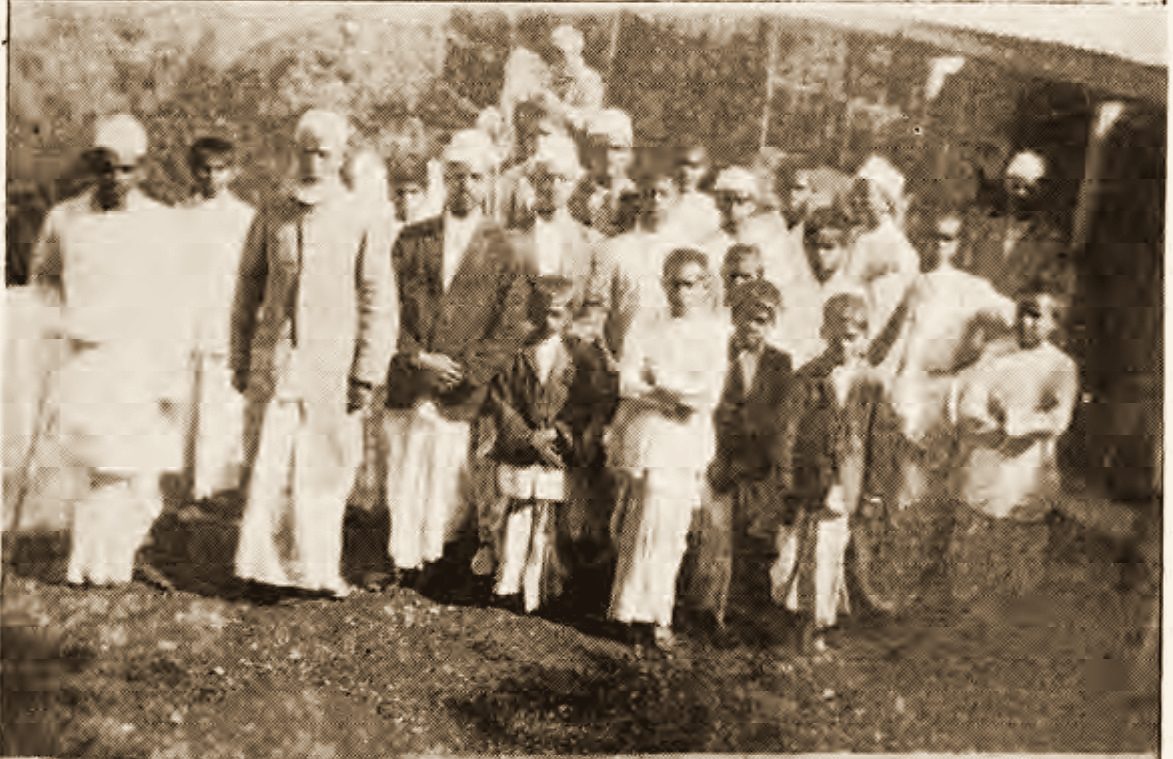
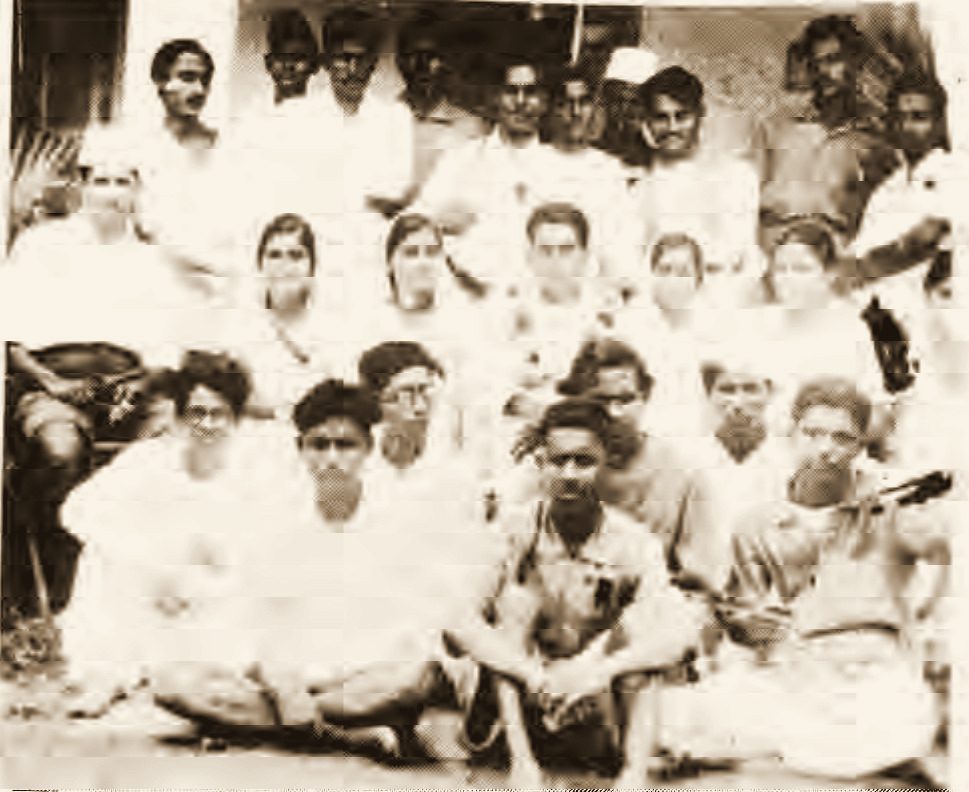
He studied at the D.A.V. High School at Cawnpore for his matriculation, and at Dehra Dun College for his Intermediate, where he was elected vice-president of the students' union. While he was at the Gurukul at Brindaban, the first edition says, he argued with its head to have English taught as a subject. In 1928 he led a party of Fiji students into the Himalayas to Mussoorie, walking the last twelve miles up a steep foot track.
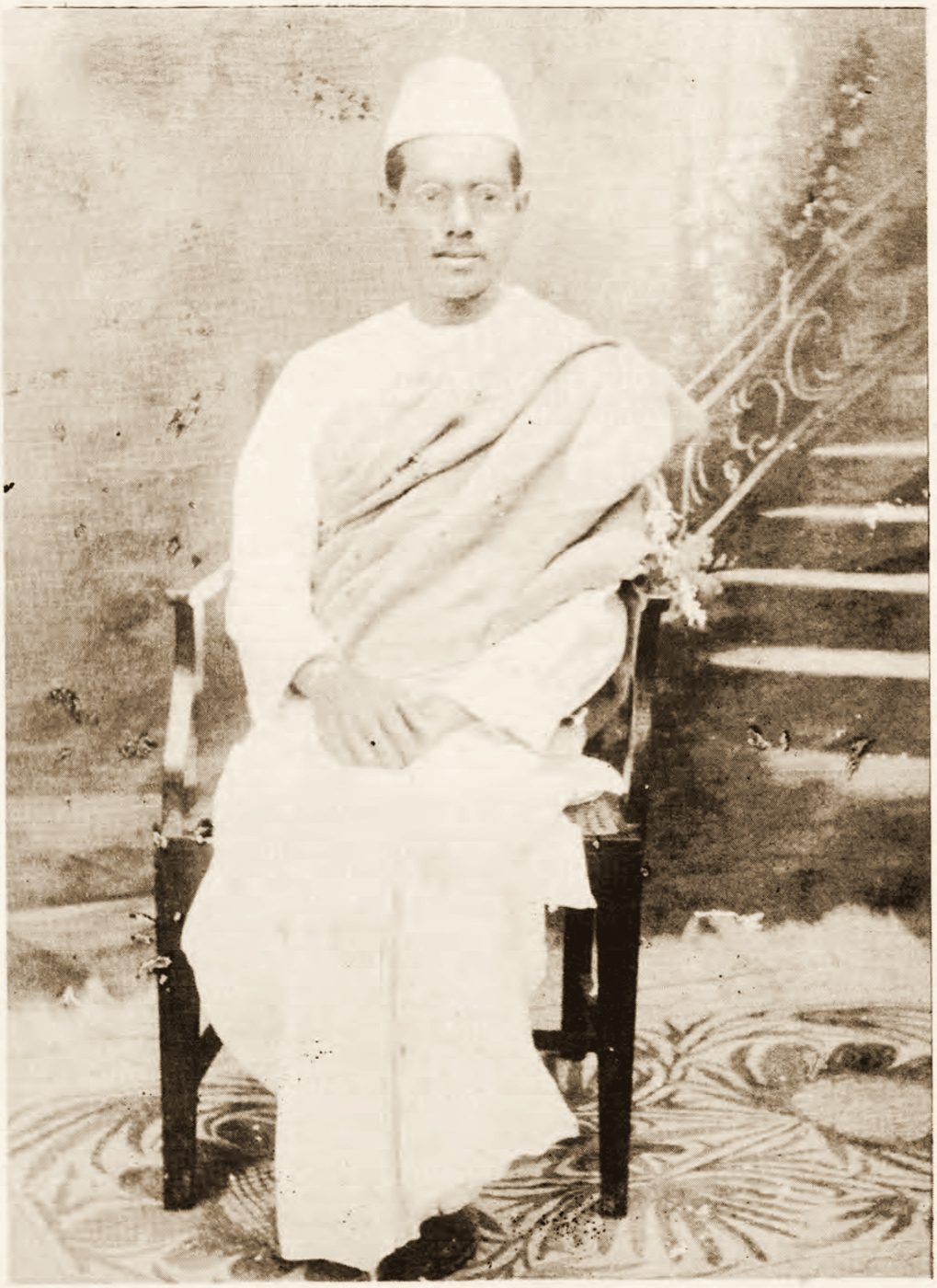
Later he studied at Benares Hindu University, where, according to the first edition, he took the degrees of B.A. and B.T. (Bachelor of Teaching) in 1933. Some later summaries, including English Wikipedia, mention only the B.A. A 1949 photograph of his college at Lautoka shows him as "B.D. Lakshman, B.A., B.T.".
Meeting Nehru
The first edition is frank that his first view of Indian politics was a radical one. It says that he came to know the revolutionaries of the Kakori case, who wanted to win independence by force, and trained with them. This is the first edition's account; no other record of it has been found. What changed his path, it says, was a meeting with Jawaharlal Nehru.
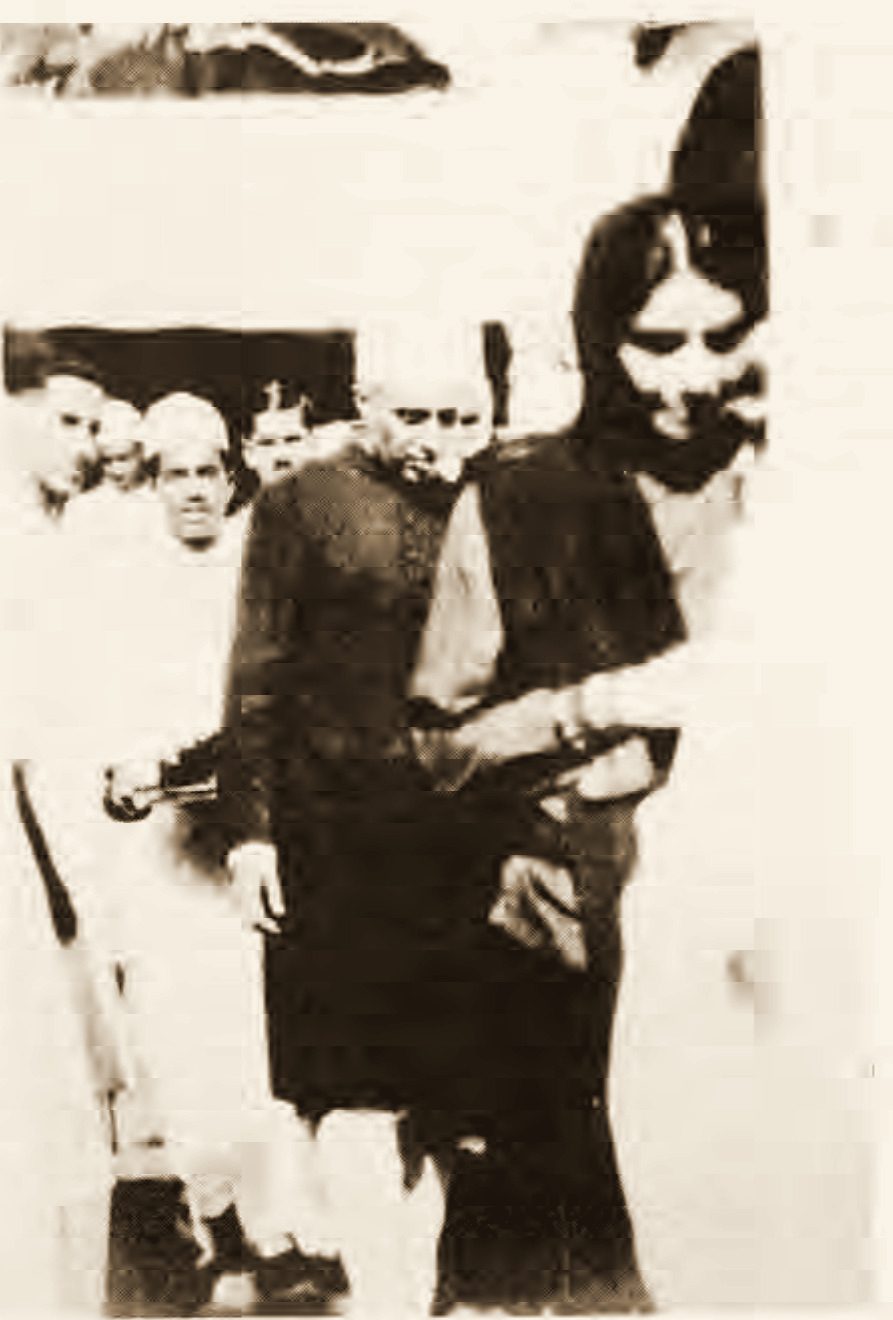
In 1929 Nehru was President-elect of the Lahore session of the Indian National Congress. Lakshman proposed that the students' union invite him to Dehra Dun to speak on the change in the Congress goal from dominion status to full independence. The union's executives laughed at the idea, but he went to Mussoorie, where Nehru was on a short holiday, and was given five minutes with him. According to the first edition, Nehru became so absorbed in his account of the Indians and the Fijian people of Fiji that the five-minute meeting became a five-day discussion, and the two became close friends. Nehru came and spoke to a very large crowd at the college, and a photograph shows Lakshman farewelling him afterwards.
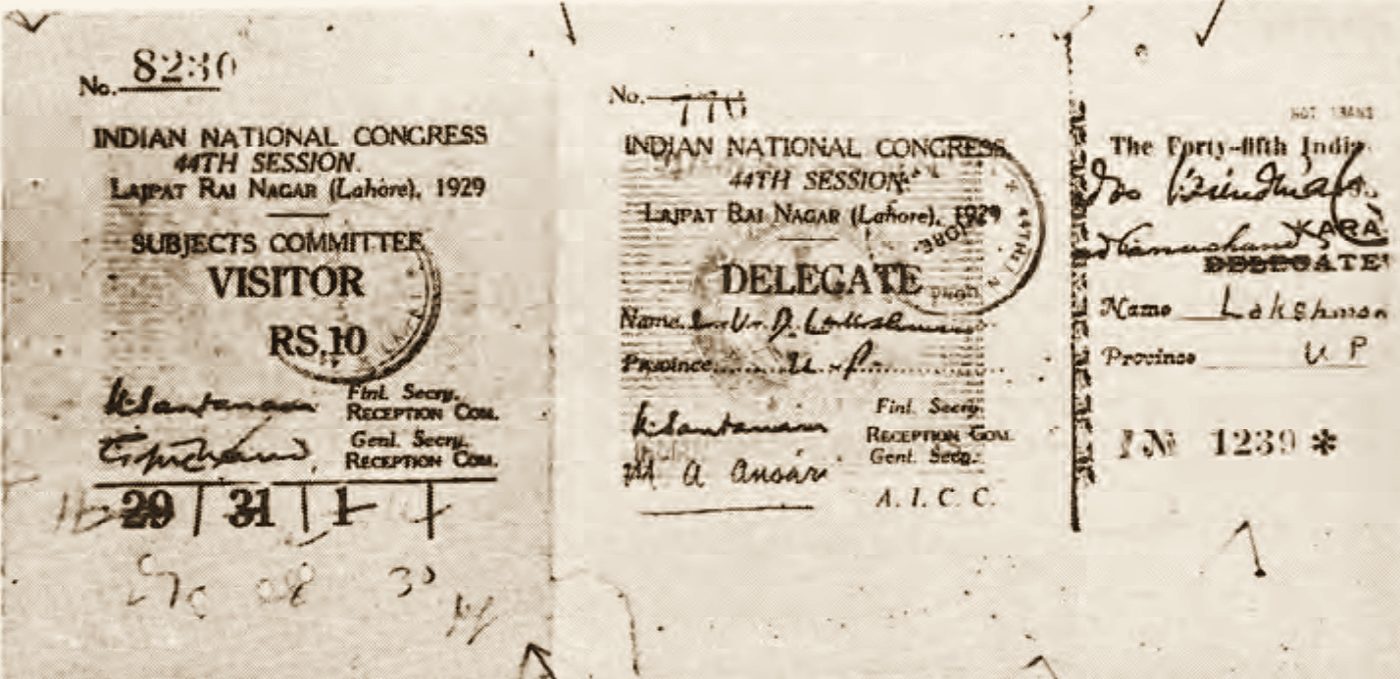
During those days at Mussoorie, the first edition says, Nehru persuaded him to join the Indian National Congress. He joined its Dehra Dun body, attended the Lahore session of the Congress – his Congress tickets were kept and are reproduced in the booklet – and went to Mahatma Gandhi's Sabarmati Ashram to learn the ways of satyagraha. In 1930 he was chairman of the Dehra Dun committee that welcomed Gandhi, Nehru and others when they came to collect funds for the freedom struggle.
The salt satyagraha and prison
Then came Gandhi's salt satyagraha of 1930. The first edition counts him among the marchers. Its photographs show him at Lahore just before the salt march, making salt from sea water at Juhu Beach in Bombay in defiance of the salt law, and holding the national flag with Congress workers at Khar.
He joined the first Benares jatha, a band of volunteers who came to Bombay to protest against the arrest of Pandit Madan Mohan Malaviya, and he was farewelled with other Congress workers at Bori Bunder station. The next day, the first edition says, he was arrested at Poona and held for four months at Yerwada Central Prison, where Gandhi was also held. (The Fiji Times, looking back in 2020, says that he "spent time in jail with Mahatma". The sources do not say that the two men shared a cell.)
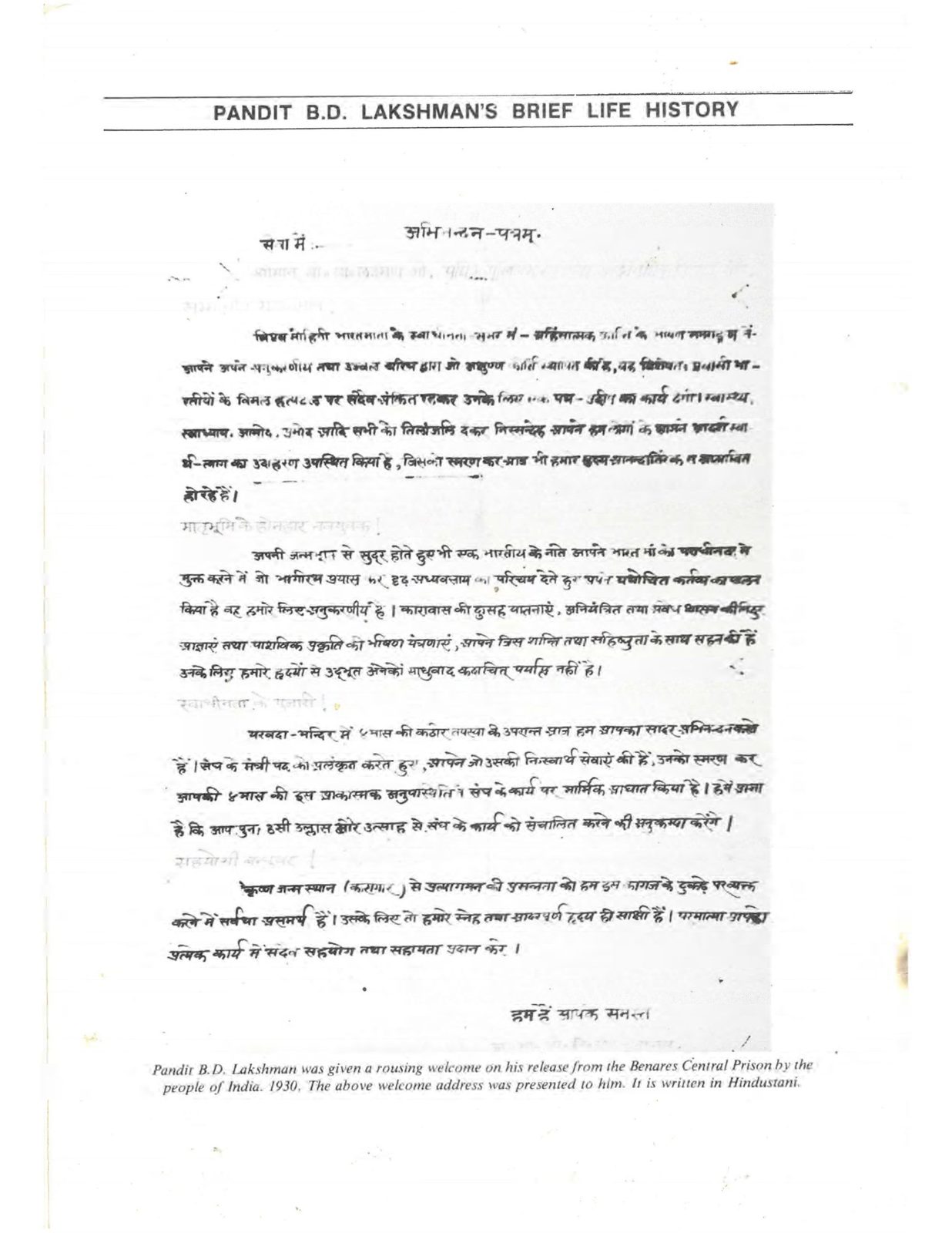
Prison was hard. The first edition describes solitary confinement and heavy labour – making munj rope, breaking boulders and turning the grinding mill – and harsh treatment. Because of his activities in prison, it says, the authorities considered him too dangerous to release in the Bombay province and moved him to the Benares Central Prison. He and other leaders were released in the following year, after the Gandhi–Irwin Pact. On his release from Benares the people gave him a rousing welcome and presented him with a welcome address written in Hindustani, which is reproduced on the last page of the first edition.
A letter from Gandhi
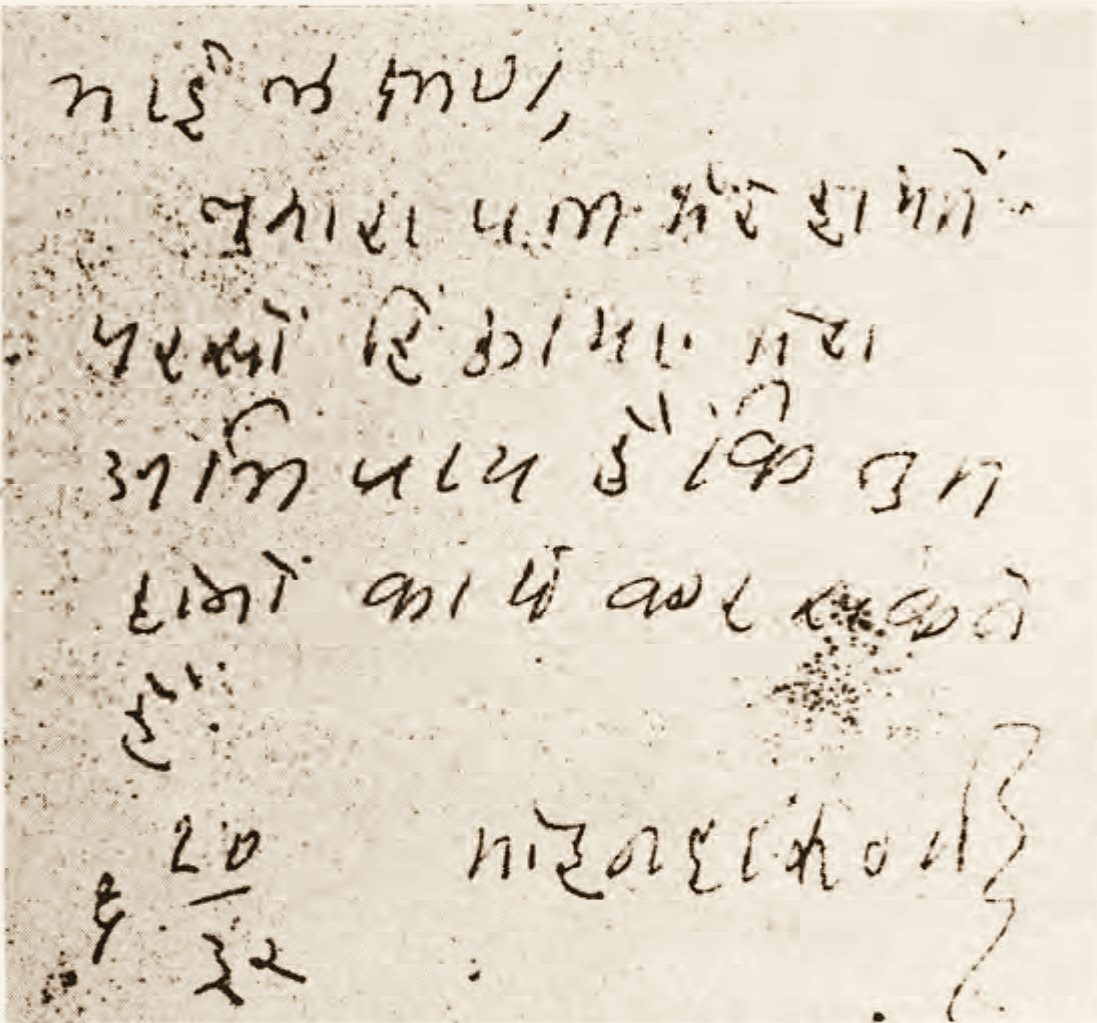
The first edition also reproduces a letter to him from Mahatma Gandhi, written in Gujarati. It says that in it Gandhi lovingly told him to do both things: to join the political movement in India, and to work hard at the higher education he would take back to Fiji.
The road home
In 1933, his degrees completed, he set out for home. At Mandapam Camp he boarded a boat to cross to Ceylon, but on board, the first edition says, the police told him that he was a prohibited immigrant to Ceylon, Australia, Fiji, New Zealand and Tonga. He was arrested and brought back to Mandapam.
The first edition tells how the people of Fiji, represented by Pandit Vishnu Deo and Mr R. Parmeshwar, protested to the Government of Fiji that he was Fiji-born and should be allowed home, and how the Indian Citizenship Association of Bombay took up his case with the Government of India. According to the first edition, the matter went to the Privy Council, which ruled that as a Fiji-born citizen he could not be stopped from returning. The prohibitions were withdrawn, and he was allowed to come home under a bond of £3,000 for three years. No independent record of the prohibition order or of a Privy Council ruling has yet been found; this is the first edition's account.
While his case went on, he stayed for two weeks in Madras with Mr V.S. Srinivasa Sastri, whom he had first met when Mr Sastri came to Fiji in the early 1920s, and for a month with the Bhatt family at Khar in Bombay. He also went back to Poona to see Mahatma Gandhi, who had begun a fast there.
In 1934 he came home by way of Australia and New Zealand, on the Niagara. A large crowd met him at the Suva wharf, and the first edition says he was given a hero's welcome throughout Fiji. Mr Ram Kissun Chaudhary and Pandit J.P. Maharaj, who had put up the £3,000 bond, met him on arrival and asked him to do nothing that might lead the Government to forfeit it. He thanked them and promised to lie low – for a while.
Sources for this page: D. Sharma, A Brief Life History (Suva, 1981), the first edition, for the narrative and all the photographs; Pacific Islands Monthly, 1 December 1981, p. 74 (obituary: seven years in India; four months in gaol); Ana Madigibuli, “Look Back: Lakshman recognised as India Independence hero”, The Fiji Times, 27 September 2020; Second Edition (2026), chapter “India: Student and Satyagrahi, 1927–1934”. Full details are on the Sources page.