
Trade Unions and the Cane Fields
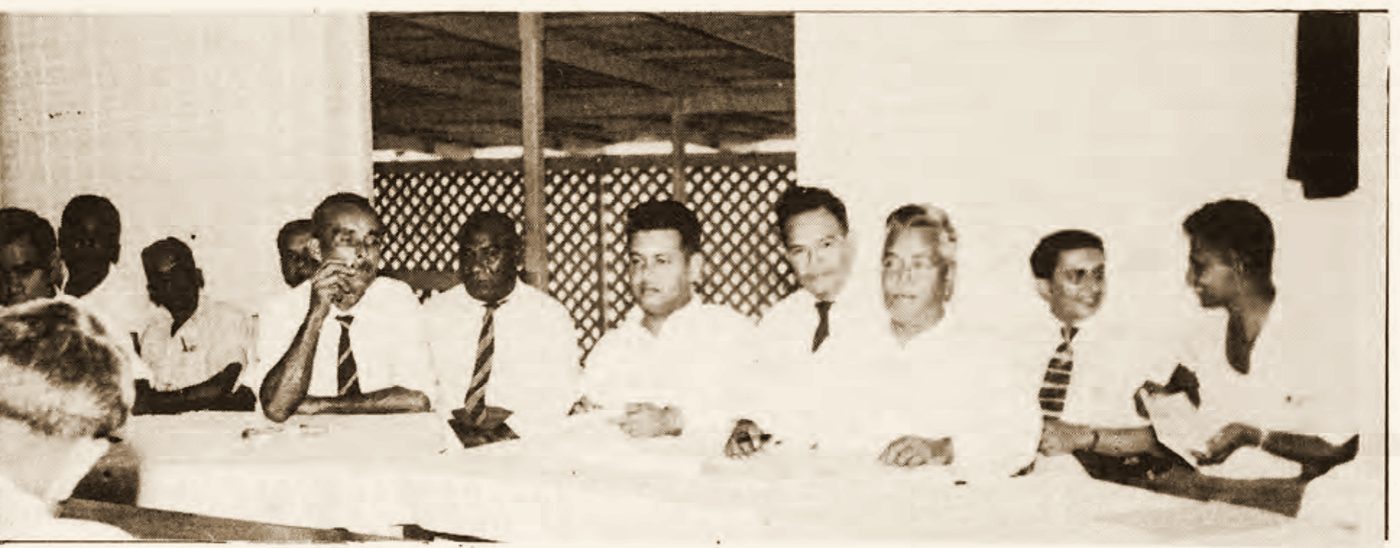
For more than twenty years Pandit B.D. Lakshman worked for Fiji's cane farmers and sugar-mill workers. The cover of the 1981 first edition called him the "Founder of Trade Union Movement in Fiji". Other sources give a fuller and more varied picture, and this page sets them side by side. Some of his union years ended in disappointment; those moments are mentioned briefly, because they are part of the record.
Quiet beginnings
When he came home from India in 1934, the first edition says, he found the cane farmers still recovering from the long strikes of the 1920s and afraid of the Colonial Sugar Refining Company (CSR), which controlled the industry. Tenants could not leave their homes without the overseer's permission and lived under the threat of eviction. Pay for working for the company was between one shilling and sixpence and two shillings and sixpence a day. The farmers, it says, were too afraid even to talk about a union.
He decided that Fiji needed a movement in the style of Gandhi, one that would first remove the farmers' fear. He did not speak at public meetings. Instead he wrote plays about the cruelty of indenture and the struggle that had ended it, taught his pupils to act them, and showed them to farmers free of charge. Then, quietly, he gathered volunteers chosen for their reliability and courage. The first edition names among them Ayodhya Prasad, Shiu Prasad Sharma, Nand Kishore, Nagesar Prasad and Pandit Bal Karan Sharma, and says they pledged themselves to secrecy and to one another.
The Kisan Sangh: accounts differ
The cane farmers' union that grew out of these years was the Kisan Sangh. The first edition tells of volunteers led by Ayodhya Prasad pitching tents on company land, beginning at Sigatoka, and refusing to move when the overseer ordered them off at Cuvu. When the overseer gave up, the news spread, and within three months, it says, thousands had joined.
Accounts differ on his exact part in its founding. The first edition calls him the Sangh's "silent master mover", who, like Gandhi with the Congress, chose to stay behind the scenes and did not become a formal member. Historians credit the founding to the men who led it in public: the Kisan Sangh came into existence at Ba in November 1937, with Ayodhya Prasad as its main organiser and founding general secretary and M.T. Khan as its first president. His obituary in Pacific Islands Monthly says that he helped to establish the Sangh between 1937 and 1940, and that he served as its president in 1949.
All the sources agree that he was close to the Sangh from its early years, that its support carried him into the Legislative Council in 1940, and that he represented it in negotiations with the CSR. The first edition adds that he also formed a workers' union, the Chini Mazdur Sangh.
The Industrial Workers' Congress
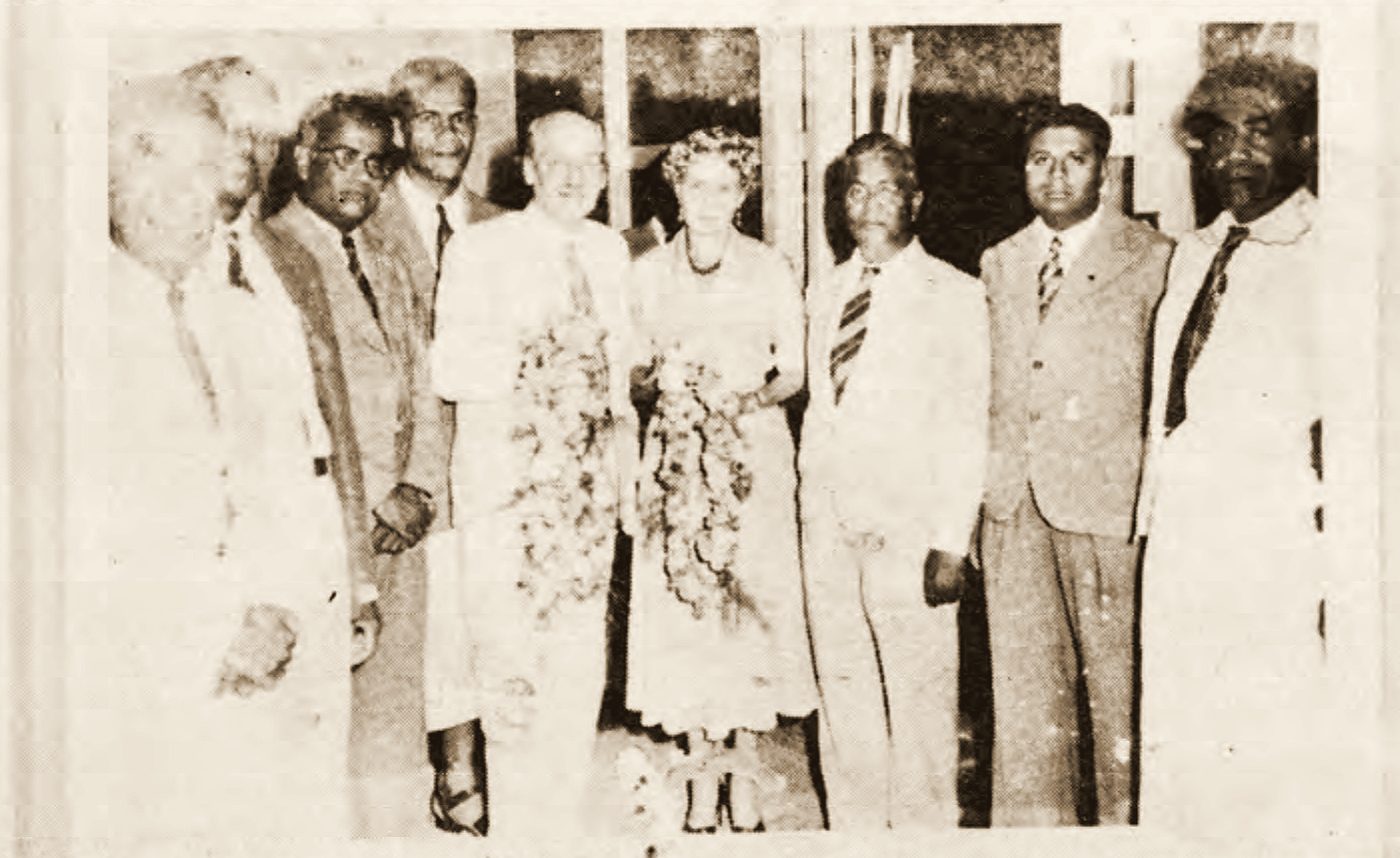
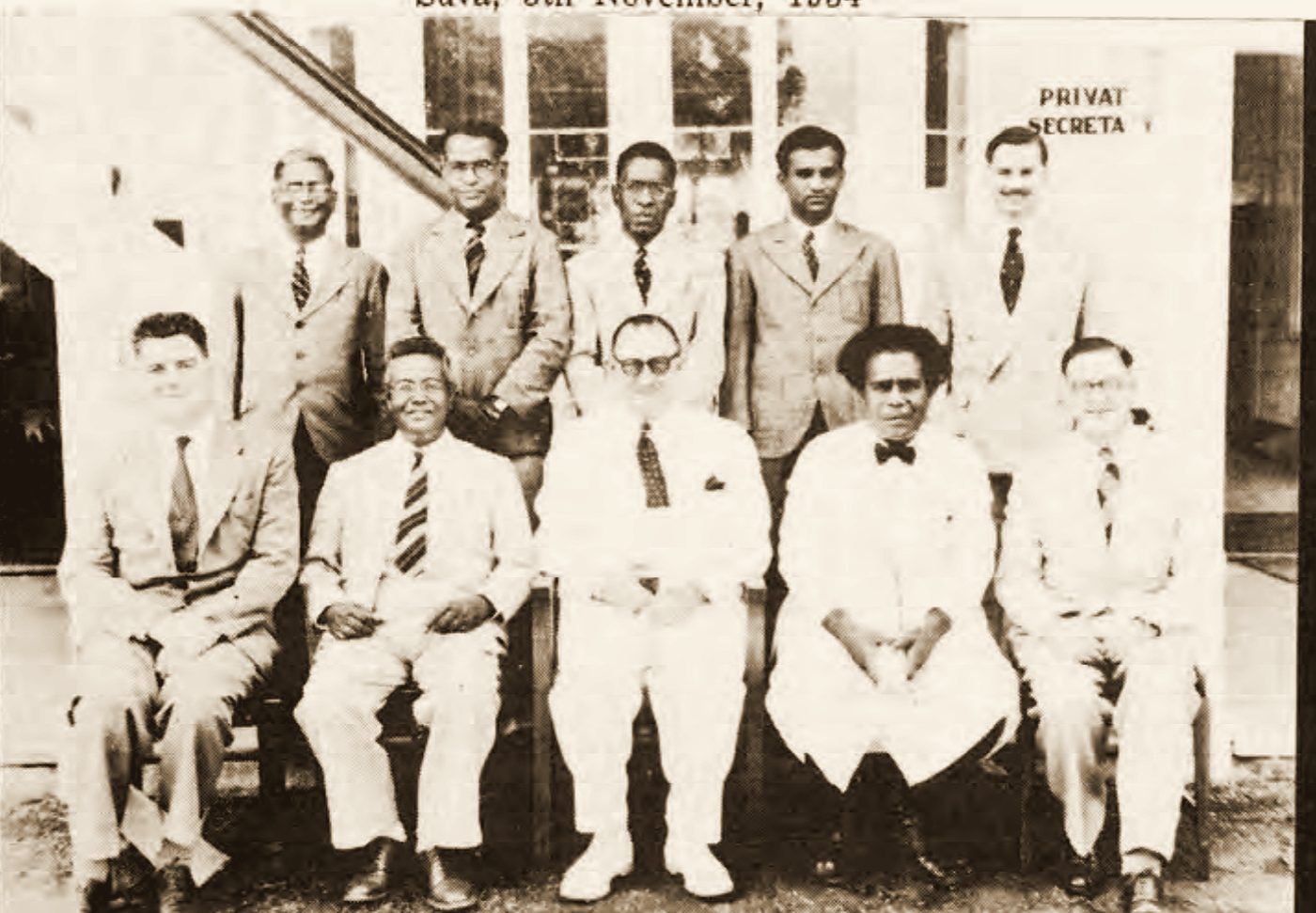
The first edition says that he founded the Fiji Industrial Workers' Congress and was its president for many years, and that he turned it into the Fiji Trades Union Congress. By 1954 he was certainly its president. On 18 September 1954 he was among the union leaders who welcomed the British Labour leader, Mr C. Attlee, and Mrs Attlee at Nadi Airport, and on 5 November 1954 he was part of the Congress's delegation to the Governor, Sir Ronald Garvey, in Suva.
In July 1957 there was an unofficial strike at the sugar mills. In August a meeting of the Congress at Lautoka replaced him as its president. It was a setback, but not an ending. By 1959 he was leading the sugar workers again.
A portrait in 1959
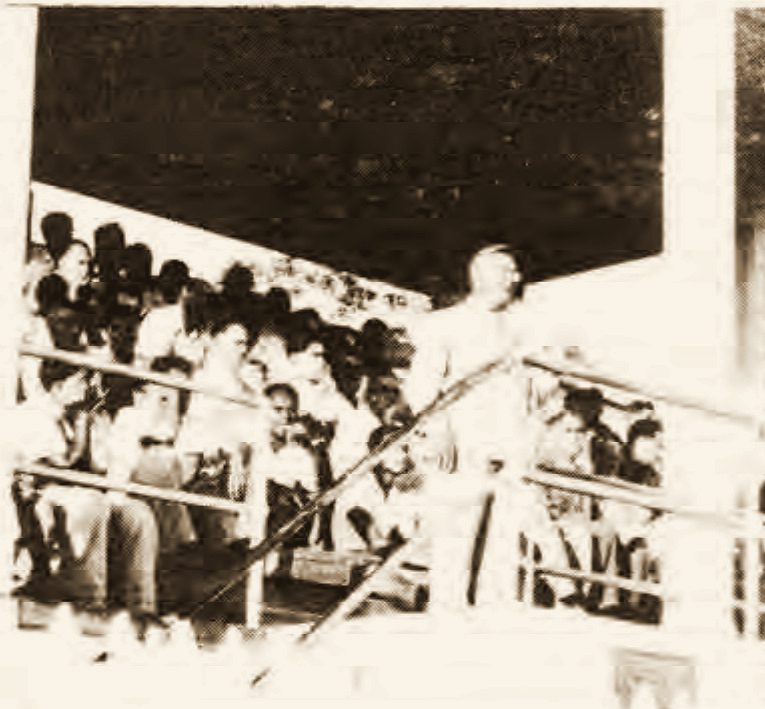
In February 1959 the journalist R.W. Robson of Pacific Islands Monthly, who had watched him address a public meeting at the Lautoka sportsground, described him as a big, good-looking man and a fluent speaker in English and Hindustani, forceful but not violent in his speech, and probably the most influential Indian in that part of Fiji.
The 1959 wage campaign
In 1959, as General President of the Fiji Sugar Industry Employees' Association, he led a campaign for higher wages for the mill workers, seeking three shillings an hour and a forty-hour week. He floated the idea of a peaceful "non-eating week". Using the Government's own figures for the cost of feeding prisoners, he argued that a family was "better off in prison" than living on the basic wage.
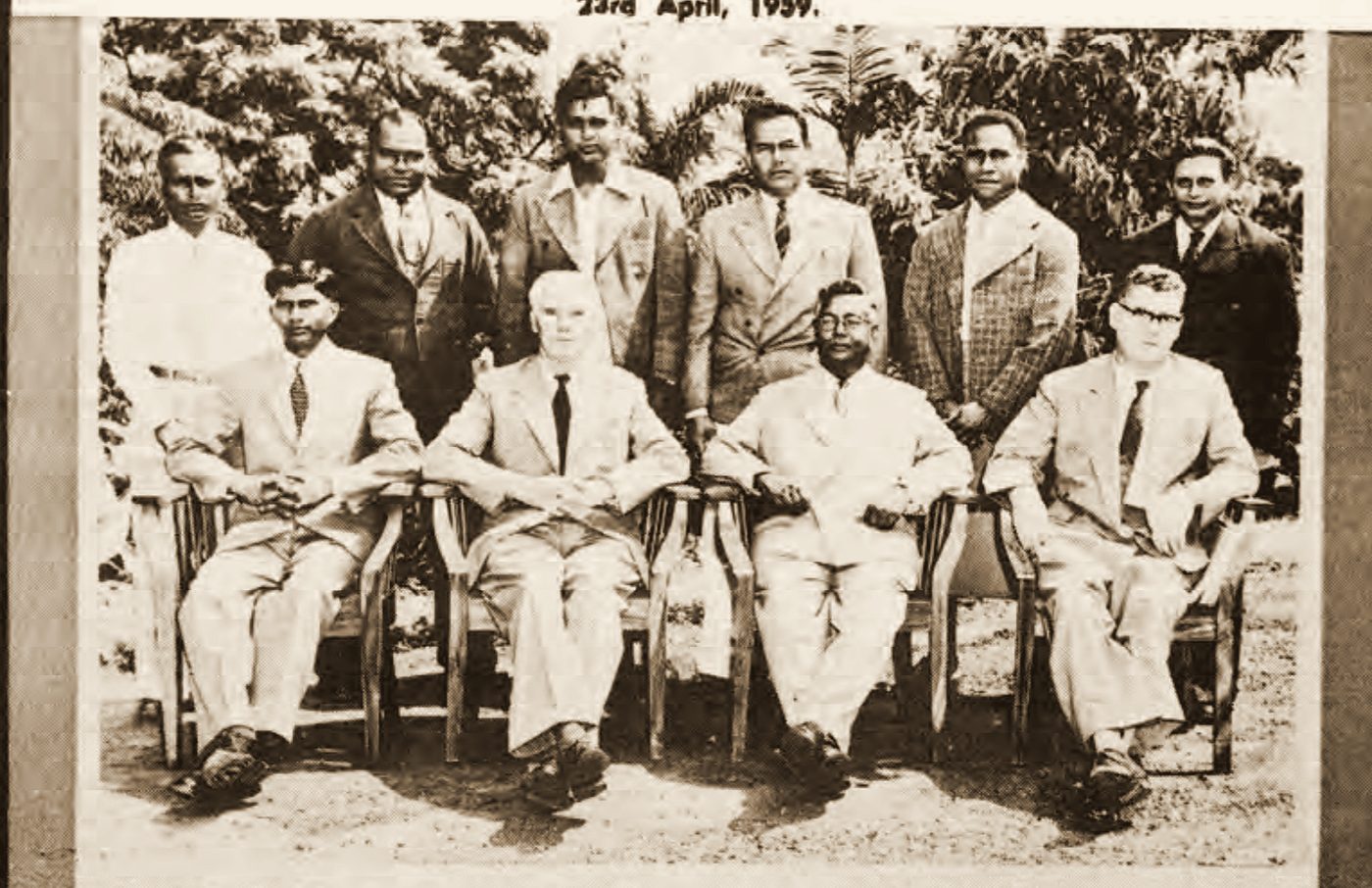
On 23 April 1959 he was part of the Association's deputation to the Governor, and that day the Governor announced a Board of Inquiry into the dispute, chaired by G.G. Honeyman, QC. The hearings began on 25 May, and he led the Association's delegates. The first edition says that he addressed the Board for weeks and that his statements made headlines in the local press.
The Board reported in August. It found that the unrest had several causes, among them the company's remote control from its head office in Sydney, and it was critical of his leadership too. A majority of the Board recommended a rise of threepence an hour, to a basic wage of one shilling and eightpence, and on 27 August the company announced that it would accept the new wage. The first edition counts the outcome among his victories. The same year he was elected to the Legislative Council again and became president of the Fiji Trades Union Congress.
Albert Park, December 1959
In December 1959 a strike by oil workers in Suva, led by James Anthony, turned into rioting. Stones were thrown, shop windows smashed and street lights destroyed. Pacific Islands Monthly reported that Mr Anthony and Mr B.D. Lakshman, "Indian MLC and trade union leader", together with leading Fijian chiefs, appealed for calm.
On 10 December the Governor announced emergency regulations and a curfew. That afternoon, before the regulations took effect, Lakshman addressed a public meeting at Albert Park. The magazine's record of events says that he obtained from the crowd a promise that essential services would continue and that there would be no more violence. "And they did it," an onlooker told the magazine. "They walked home again like lambs."
The first edition gives his words that day. He began "Friends and brothers" and told the crowd that "a crucial time has come when I must speak to you in person." The military, he warned, was ready to move against them, and they must give it no cause. "Therefore I order you to throw away the stones and go back to your homes. Let the buses run and meet everyone as if nothing had happened." When he asked those who agreed to raise their hands, the first edition says, every hand went up.
Accounts differ on the size of the crowd: more than ten thousand, according to the first edition; about 3,000, according to Pacific Islands Monthly. They agree on what mattered. The crowd listened to him and went home. The next day the workers' buses began to run again by agreement with the union, and an interim settlement of the strike was announced on 15 December. The first edition adds that Mohammed A. Tora and James Anthony were also urging the strikers to stop.
A few days before the disturbances, A.D. Patel later wrote, there had been "a mammoth meeting at Albert Park" at which "the demand for independence was raised". The editor of Patel's writings, Brij V. Lal, identifies its convener as B.D. Lakshman.
The end of his union office
In February 1962, after an official inquiry into the running of the sugar workers' union, which Pacific Islands Monthly now called the Fiji Sugar Employees' Union, the Registrar of Trade Unions removed him from the union, with two other officers. In March the union's executive elected a new president. So ended his years at the head of the sugar workers.
Still to be read
A study by K.W. Hince, B.D. Lakshman and the Fiji Trade Union Movement (University of the South Pacific, 1991), is known to exist but could not be consulted for this site. If a copy is found, this page may be revised.
Sources for this page: D. Sharma, A Brief Life History (Suva, 1981), the first edition, including its photographs and the Albert Park speech; Pacific Islands Monthly: 1 September 1957; 1 February 1959, pp. 60–61; 1 May, 1 June, 1 August, 1 September and 1 October 1959; 1 December 1959; 1 January 1960; 1 March and 1 April 1962; 1 December 1981, p. 74. Brij V. Lal, A Vision for Change: AD Patel and the Politics of Fiji, chapter 4; Lal (ed.), Speeches and Writings of AD Patel, Part I, p. 35 and note 25. Second Edition (2026). Full details are on the Sources page.