
In the Legislative Council
1940–1944, and 1959 into the early 1960s
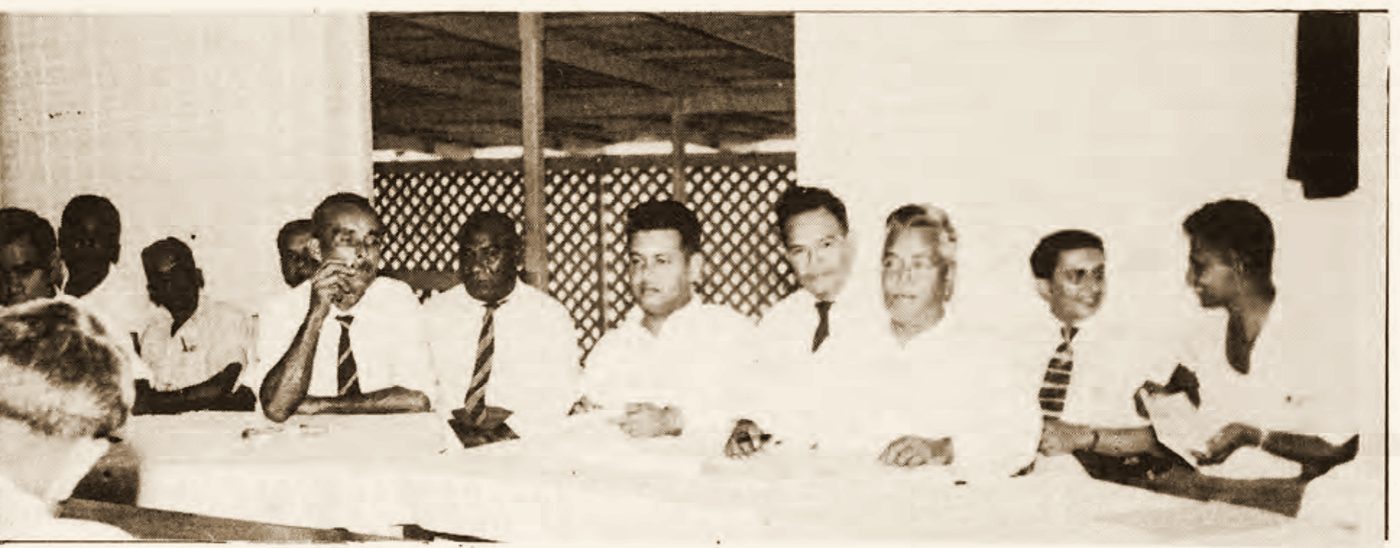
Pandit B.D. Lakshman sat in Fiji's Legislative Council, the colony's law-making body, in two periods. He was elected in 1940 and lost his seat in 1944. Fifteen years later, after another defeat along the way, he won it back. The full record, losses included, is given here, because the return is the stronger part of the story.
Elected in 1940
In 1940 he stood for the North-Western Division, one of the seats elected by Indian voters. Pacific Islands Monthly reported that Brahma Dass Lakshman received 1,010 votes and Sada Nand Maharaj 447. He replaced the sitting member, Chattur Singh, with the support of the Kisan Sangh, the cane farmers' union. The first edition says that he was sponsored by both the Kisan Sangh and the workers' union, the Chini Mazdur Sangh.
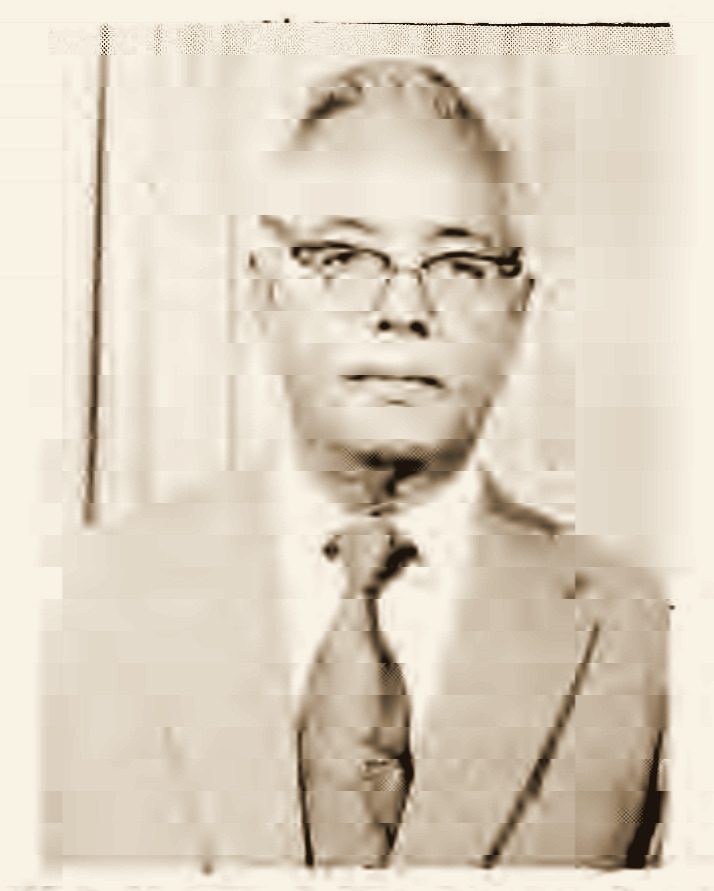
The first edition describes the change in him: the simple, hard-working schoolteacher became a powerful and fearless speaker who challenged the Government at every turn. It credits him with asking for trade union regulations, and says that when the Government had no expert to write them, it asked him to do so, and that his draft was presented to the Council and adopted. This is the first edition's account; the Council's own debates have not yet been searched to confirm it.
The war years
His first term fell during the Second World War. In June 1942 a conference of the Indian community elected the "Hon. Mr. B. D. Lakshman" to its Central War Committee, and early in 1943 he was named a member of the Fair Rents Board for the district of Lautoka.
In May 1943, invited by the Governor to speak for the Indian members on enlistment, he said that Indian leaders had accepted voluntary recruitment if pay and privileges were equal to those of Europeans. He put the low number of Indian recruits down to pay and to the Government's neglect of the community, including its education.
Sugar, and a divided year
These were years of hard bargaining with the Colonial Sugar Refining Company (CSR), which controlled the sugar industry. A photograph in the first edition shows what it calls the first conference between the company and the cane farmers on an equal basis, at Lautoka in the early 1940s, with him leading the farmers.
In 1943 a dispute over the price of cane divided the farmers. Pacific Islands Monthly reported in October that on 12 July "a Mr. Lakshman, who appears to be a leader of the Kisan Sangh" had asked for a commission to inquire into the price of cane, and that July and August he took part in meetings at Government House with A.D. Patel and other leaders. The farmers' organisations split, and the leaders of the time wrote about one another with strong feeling. Accounts of the dispute differ, and this site does not take sides.
1944, and the years outside
In the 1944 election A.D. Patel won the North-Western seat, with 1,841 votes to 554, and Lakshman left the Council. For the next fifteen years his public work lay outside it, in education, business and the trade unions. He stood for the Lautoka Town Council in 1953, and for the Legislative Council again in 1956, without success on either occasion.
Elected again in 1959
In 1959 he came back. In the North-Western Indian seat he won 2,637 votes, against 2,158 for J. Madhavan and 2,075 for Ayodhya Prasad. Pacific Islands Monthly, which had often been critical of him, wrote that "Mr. Lakshman is no fool". It judged him one of the best-educated and shrewdest Indians in Fiji, and said he had been Fiji's most persistent and courageous fighter for what he believed to be the interests of the colony's underprivileged workers.
In December 1959, during the Suva riots, he spoke to the crowd at Albert Park. That day is told on the Trade Unions page. Afterwards he tried to move a Council motion asking for an inquiry into the police use of smoke bombs, but the Government closed the session.
Sugar again
Back in the Council, he turned again to sugar. In a debate in September and October 1960 he argued that moneylenders kept cane farmers in debt, and the Council accepted his motion for an inquiry into the sugar industry, except for one clause. On 22 December 1960 the Government announced the Fiji Sugar Industry Commission of Inquiry, led by Sir Malcolm Trustram Eve. The first edition says that the commission came about through his motion and that it gave a boost to the farmers' income from cane.
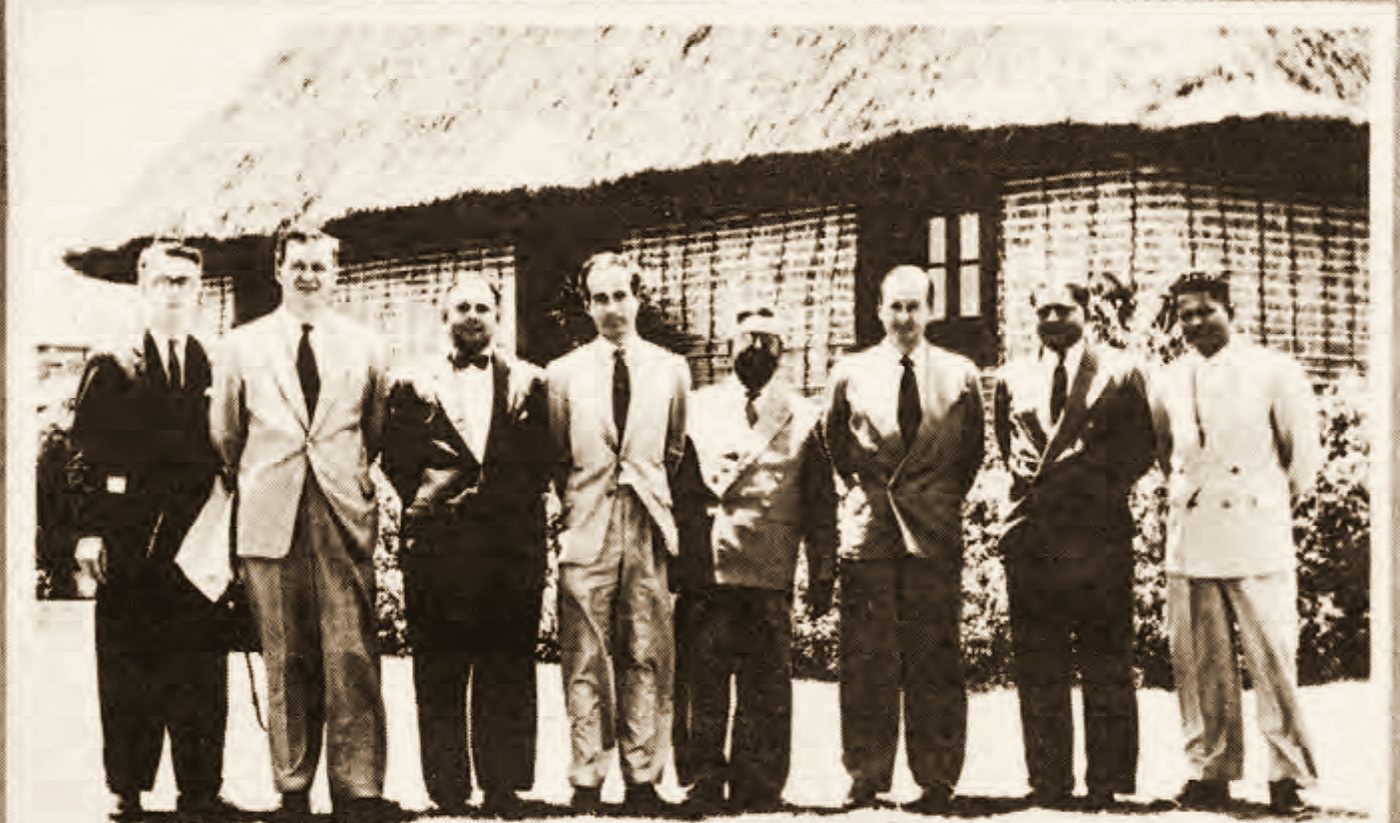
On 14 October 1960 he was photographed with the other Indian members of the Council and the visiting Under-Secretary of State for the Colonies, Mr Julian Amery, at the Governor's Bure in Lautoka.
He spoke on many other subjects. In April 1961, in a debate on tourism, he argued that "tourism should be developed in other areas besides Suva". That year he and two fellow members, A.I.N. Deoki and H.B. Gibson, were reported to be directors of a planned match-making company in Fiji.
Travels in 1961
Early in 1961, as chief spokesman for the mill workers' organisations, he visited Australia to talk with Australian union leaders and senior officers of the CSR before the sugar inquiry. Pacific Islands Monthly, which had often been hard on him, now wrote that in the past couple of years he had "shown some sense of public responsibility, and breadth of vision".
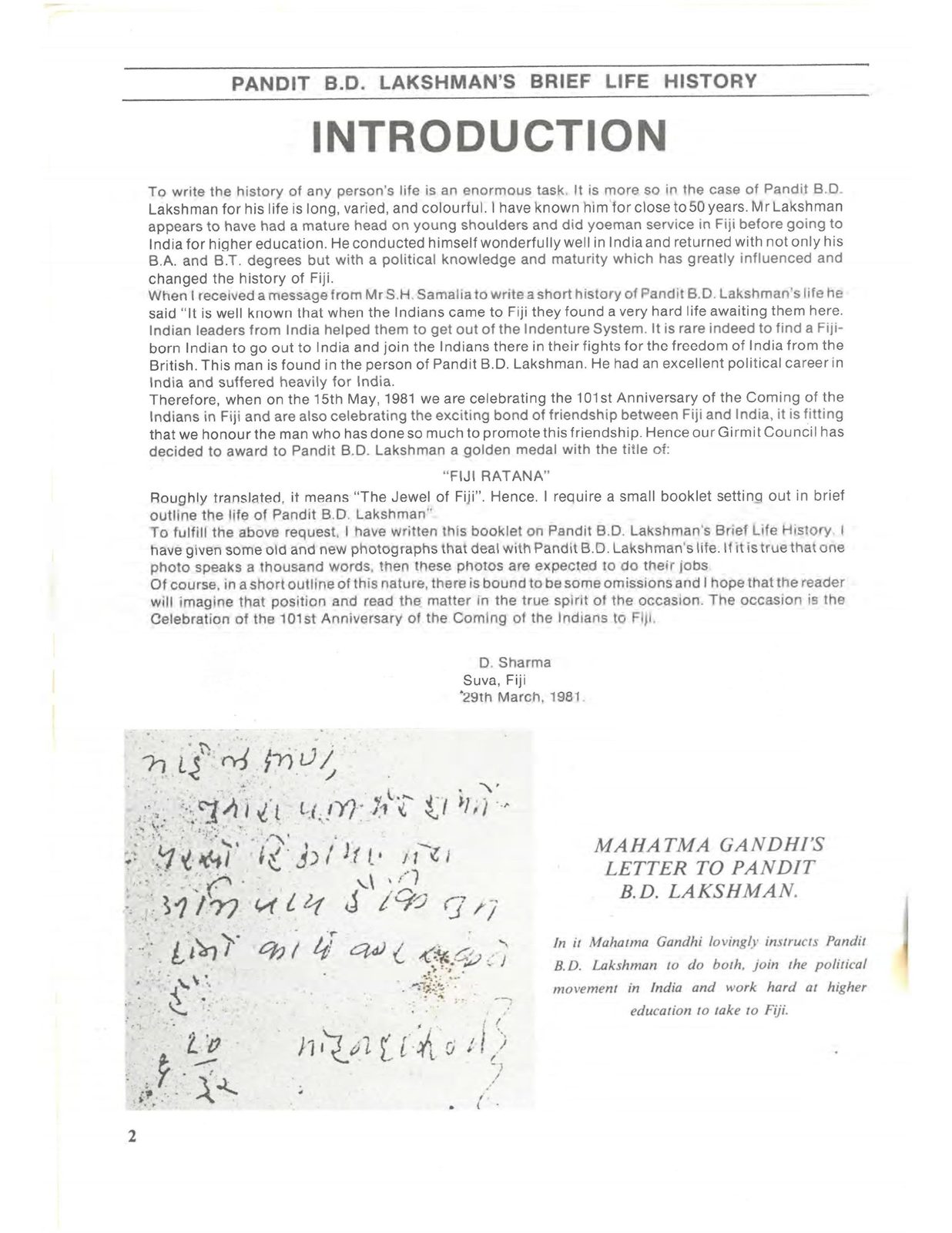
Later that year he travelled to the United States and Britain. A letter of introduction from the American Consulate in Suva, dated 8 May 1961 and signed by the Vice-Consul, John C. Dorrance, described him as a distinguished member of the Legislative Council, President of the Fiji Trades Union Congress and President of the Fiji Sugar Workers' Union, and as "without doubt one of the most important and influential persons in this Colony". The first edition says that in Hawaii he was welcomed at a joint meeting of the combined Houses and by the Hawaiian labour unions, that a union welcomed him on the West Coast, and that in New York he met the Teamsters' president, James Hoffa.
In London, accompanied by Mr John Falvey and Mr Semesa Sikivou, he held talks with the British Government. The first edition says that he asked it to hold a constitutional conference to give Fiji more representative government, and it calls him the first person in Fiji to ask for independence. Accounts differ on that point. What can be shown from other sources is that A.D. Patel wrote of a "mammoth meeting at Albert Park" a few days before the riots of December 1959, at which "the demand for independence was raised", and that the editor of Patel's writings, Brij V. Lal, identifies its convener as B.D. Lakshman.
His second period in the Council continued into the early 1960s. The first edition says that, for want of enough votes, he was unable to attend the later constitutional conference in London.
Election results
| Year | Contest | Result | Votes |
|---|---|---|---|
| 1940 | Legislative Council, North-Western Division (Indian) | Elected | B.D. Lakshman 1,010; Sada Nand Maharaj 447 |
| 1944 | Legislative Council, North-Western Division (Indian) | Not elected | A.D. Patel 1,841; B.D. Lakshman 554 |
| 1953 | Lautoka Town Council | Not elected | — |
| 1956 | Legislative Council (Indian seat) | Not elected | B.D. Lakshman 109, fourth; won by Ayodhya Prasad, 2,718 |
| 1959 | Legislative Council, North-Western Division (Indian) | Elected | B.D. Lakshman 2,637; J. Madhavan 2,158; Ayodhya Prasad 2,075 |
Sources for this page: Pacific Islands Monthly: 15 August 1940, p. 6; 15 June 1942; 17 February 1943; 17 July 1943; 18 October 1943; 18 September 1944; 1 April 1953, p. 28; 1 October 1959; 1 October 1960; 1 January, 1 February, 1 May and 1 September 1961. Fiji Elections blog (1956 result). Brij V. Lal (ed.), Speeches and Writings of AD Patel, Part I, p. 35 and note 25, and Part II, note 2. D. Sharma, A Brief Life History (Suva, 1981), including the 1961 consulate letter and the photographs. Second Edition (2026). Full details are on the Sources page.