
Teacher and Schools
Pandit B.D. Lakshman began his working life as a teacher, and he never really stopped. Before he went to India he had been headmaster of the Marist Brothers primary school in Suva and had run a night school there (see Early Life). In India he studied for the B.T., the degree of Bachelor of Teaching, and Mahatma Gandhi's letter to him, as the 1981 first edition describes it, urged him to work hard at the higher education he would take back to Fiji. This page follows what he did with it.
Home again, and to the west
He came home in 1934. The first edition says that he found the Indian community in disarray over the question of a common roll. Indian leaders had boycotted the Legislative Council, and he tried, without success, to persuade Pandit Vishnu Deo, Mr K.B. Singh and others to end the boycott and work with the Government on other matters important to the people of Fiji. So he went to the western side of Viti Levu.
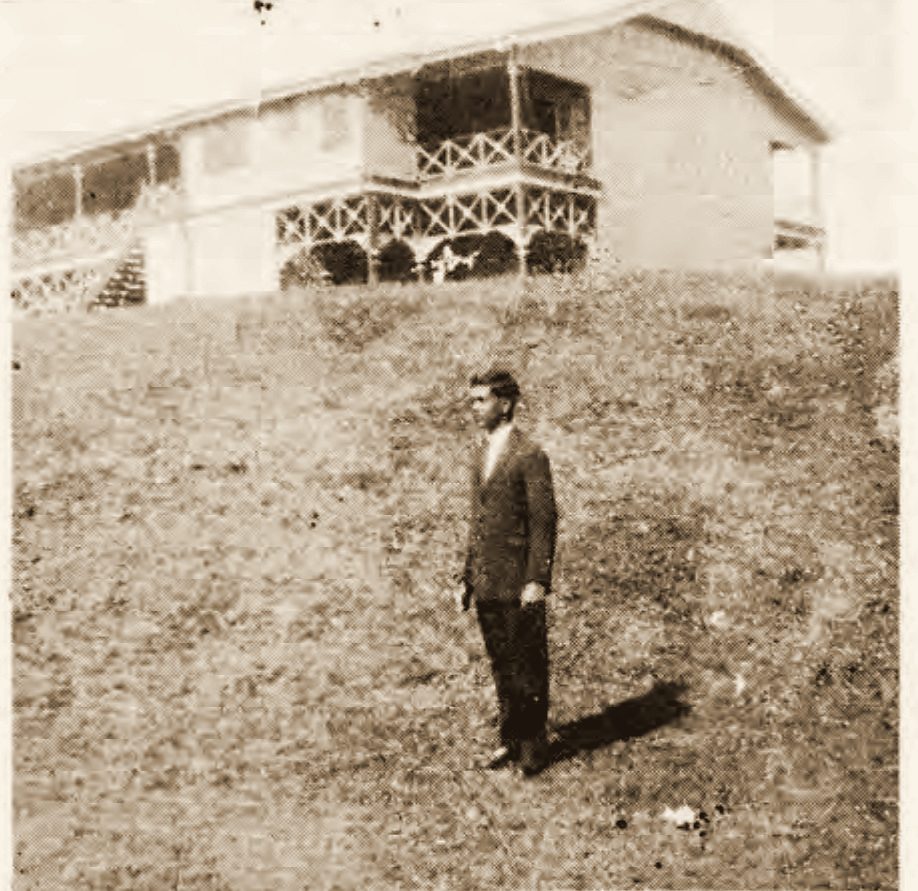
The Gurukul at Saweni
There he started a model high school at the Gurukul, Saweni, near Lautoka. His obituary in Pacific Islands Monthly adds that the school was run under the auspices of the Arya Samaj.
He was watched closely. The first edition says that the Government, knowing his record in India, appointed a senior official, Mr MacMillan, to watch his work, on top of constant watching by the police.
On the surface, the first edition says, he was a simple teacher. In reality he also spent a whole year travelling up and down the coast, talking to cane farmers and studying their conditions. He wrote plays about the cruelty of indenture, taught his pupils to act them, and showed them to farmers free of charge. That quiet organising work grew into his part in the cane farmers' movement, which is told on the Trade Unions page.
The first edition also says that, in time, he left teaching and started a small printing press to help the farmers and workers. Documents from 1943 show that notices of the Kisan Sangh were printed at his press.
Mahatma Gandhi Memorial College, Lautoka
He later established his own school at Lautoka, the Mahatma Gandhi Memorial College. The first edition tells the story behind it. The Government, it says, made no provision for children who were past primary school age, and when his pleas for high schools for Indian and Fijian children went unheard, he opened a high school at his own residence in Lautoka, in defiance of the authorities. Hundreds of older children of all races, it says, came from all over Fiji. When the police were told to prosecute him and close the school, no magistrate or justice of the peace could be found who was willing to sign the summons.
According to the first edition, the Government relented, and that was the start of the committee secondary schools that grew up across Fiji.
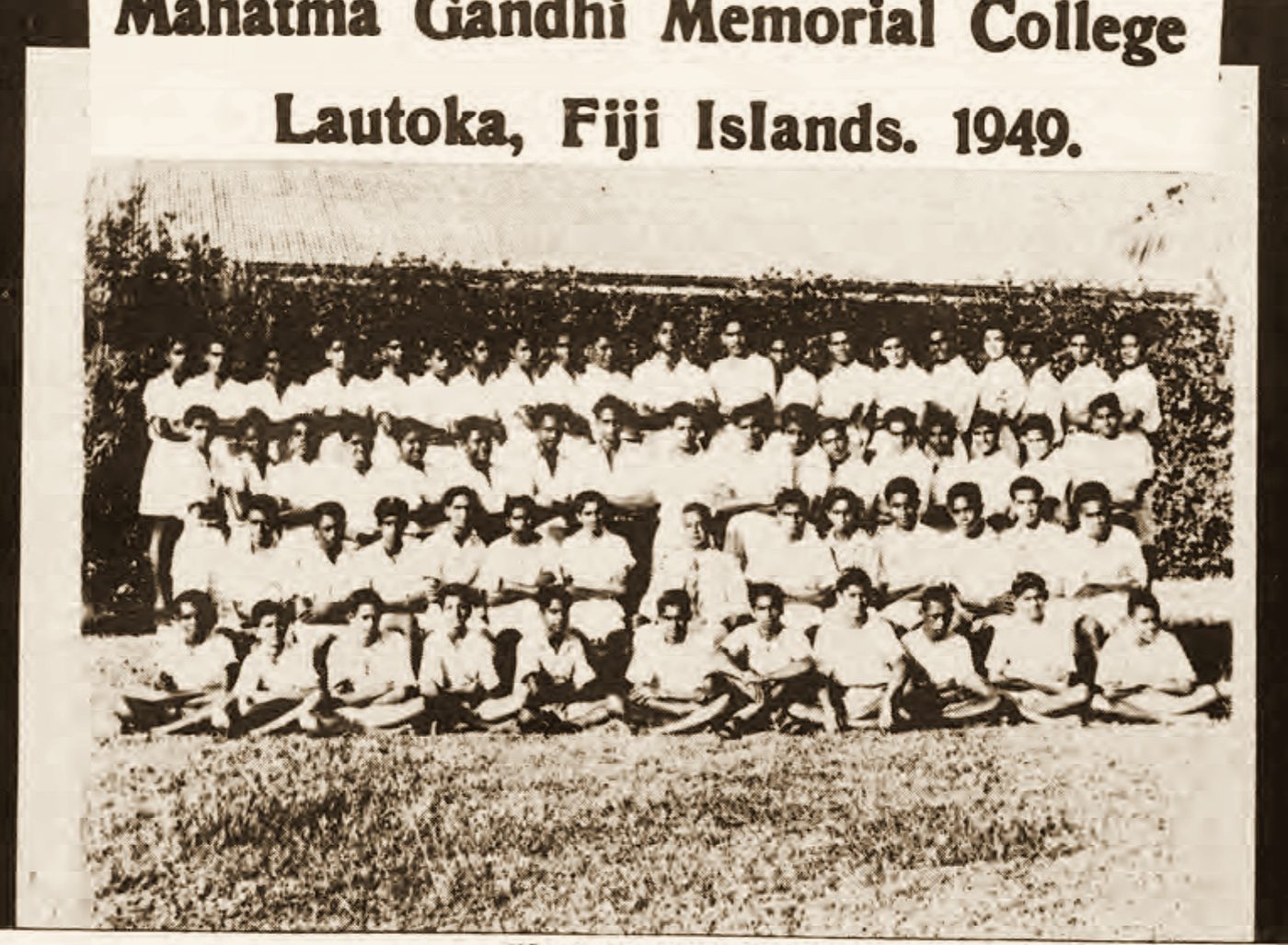
A photograph taken in 1949 shows the high school section of the college, with students from Suva, Ra, Tavua, Ba, Nadi, Nadroga, the Yasawas and Labasa. At the centre sits the principal, "B.D. Lakshman, B.A., B.T.". The students' home districts, spread across Viti Levu, the Yasawas and Vanua Levu, bear out the first edition's description of a school that drew children from all over Fiji.
The sources used for this site do not give the exact year in which the college opened. Some later summaries give an account of how and when it began; that account has not been independently confirmed here, so it is not repeated as fact.
A university for Fiji
The first edition credits him with being the first person to ask the Government, through a motion in the Legislative Council, to establish a university in Fiji, and it links that call to the birth of the University of the South Pacific. This is the first edition's claim. The debates of the Legislative Council have not yet been searched to confirm it. In 1981, the first edition adds, he was "still very active in helping all and sundry in their quest for education".
A teacher among the farmers
His teaching and his public life were never far apart. In 1949, the year of the college photograph, his obituary records that he also served as president of the Kisan Sangh, the cane farmers' union. The next pages follow his years in the Legislative Council and in the trade unions.
Sources for this page: D. Sharma, A Brief Life History (Suva, 1981), the first edition, including the 1949 photograph and its caption; Pacific Islands Monthly, 1 December 1981, p. 74 (obituary: the Arya Samaj; the Kisan Sangh presidency in 1949); Brij V. Lal (ed.), Speeches and Writings of AD Patel, Part II (the press); Second Edition (2026), chapters “Return to Fiji and the Cane Fields, 1934–1939” and “Teacher and Man of Business”. Full details are on the Sources page.